

I spent years identifying hazards before they hurt people. Then I realized I had never once turned that lens on myself.
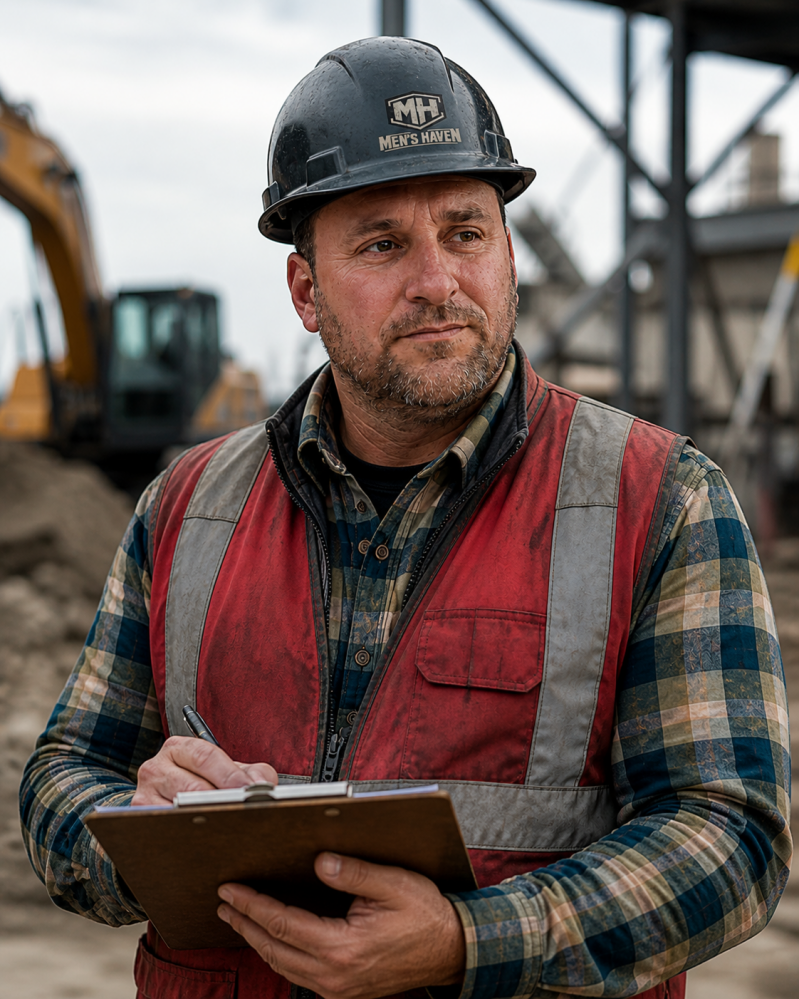
I‘ve spent years identifying hazards before they hurt people.
That is part of my job. I am a Safety Manager. I look at worksites, tasks, equipment, people, behaviors, conditions, and systems. I look for what could go wrong before it does. I ask hard questions. I look for gaps. I try to understand the risk before someone gets hurt.
That is what safety is supposed to do.
You identify the hazard. You assess the risk. You find the root cause. You put controls in place. You follow up. You make sure the same thing does not keep happening over and over again.
I have done that for years.
But I had never once turned that lens on myself.
And that is hard to admit.
Because I knew better.
I knew what it looked like when something was unsafe. I knew what it looked like when small problems were ignored until they became big ones. I knew what it looked like when people kept walking past the same hazard because they had gotten used to seeing it.
And still, I did that with my own life.
I walked past the warning signs every day and called it normal.
I was carrying extra weight. I was prediabetic. I had a family history of heart disease. I was dealing with debt that felt like it was drowning me. I had a habit of putting myself dead last and acting like that was just what men do.
Keep going. Keep working. Keep showing up. Keep saying “I’m fine.”
The problem was, I was not fine.
I was running on autopilot and calling it strength.
Then, in November of last year, I lost my son.
There is no clean way to write that sentence. There is no soft way to say it. My son is gone. And when something like that happens, it does not just hurt you. It rearranges you.
It changes the way you see yourself. It changes the way you see the world. It changes the way silence feels. It changes the way you look at old pictures, empty spaces, and all the things you thought you still had time for.
But here is the truth I had to face.
Losing him did not create every crack inside me. It exposed them.
I was already carrying more than I wanted to admit. I was already worn down. I was already tired. I was already avoiding things I needed to face. I was already putting my health, my emotions, my money, my growth, and my peace at the bottom of the list.
I just had a system for hiding it.
A lot of men do.
We get very good at functioning while falling apart quietly.
We go to work. We pay bills. We handle problems. We answer calls. We take care of other people. We become the strong one. The dependable one. The one who does not need much.
But strength can become dangerous when it turns into silence.
In safety, one of the worst things you can do is ignore a known hazard.
If you know the machine is broken and you keep running it, that is a problem.
If you know the ground is unstable and you keep walking across it, that is a problem.
If you know a worker is exhausted and you keep pushing production, that is a problem.
If you know the same incident keeps happening and you never ask why, that is a problem.
Yet that is exactly what I was doing with myself.
I knew I was tired. I knew I was unhealthy. I knew I was stressed. I knew I was grieving things I had never fully dealt with. I knew I was carrying shame, fear, pressure, and old beliefs about what a man was supposed to be.
But instead of stopping and looking at it honestly, I kept moving.
That made me the most dangerous job site I had ever walked into.
Not because I was a danger to other people in some dramatic way. But because I had become unsafe for myself.
My own life had hazards everywhere, and I had no controls in place.
No real system for dealing with the pressure. No honest process for grief. No proper boundaries. No clear plan for my health. No real way to stop the same patterns from repeating.
I was reacting instead of leading.
And in safety, reacting is usually what happens after something has already gone wrong.
That was the paradox.
At work, I could see risk. In myself, I kept looking away.
I could ask why an incident happened on a job site, but I was not asking why the same problems kept showing up in my life. I could talk about corrective action at work, but I was not taking corrective action with myself. I could tell people that safety was everyone’s responsibility, but I was not taking responsibility for the condition of my own life.
That realization did not come as some perfect lightbulb moment.
It was not dramatic. It was not clean. It was not me suddenly figuring life out.
It was more like finally being too tired to keep pretending.
It was the quiet thought of, “I cannot keep doing this the same way.”
I did not have everything fixed. I still do not. I am still in it.
I still have days where grief feels heavy. I still have days where my old habits try to pull me back. I still have days where I feel the weight of everything I have lost, everything I have avoided, and everything I still need to rebuild.
But I am not willing to keep walking past the hazards anymore.
That is where Men’s Haven comes from.
It is not built from theory. It is not built from pretending I have it all figured out. It is not built from some polished version of manhood that looks good online but falls apart in real life.
Men’s Haven is built from the truth that a lot of men are carrying more than they say.
It is for men who have been through something hard and do not have the language for it. Men who would never call a therapist, but know exactly what it means to assess risk. Men who understand work, pressure, responsibility, loss, duty, and getting the job done. Men who have been rearranged by grief, divorce, debt, health scares, burnout, fatherhood, failure, or years of pretending they are fine. Men who are tired of carrying everything alone but do not want to be talked down to. Men who are strong enough to finally look at themselves honestly.
Because that is strength.
Not pretending nothing hurts. Not ignoring the warning signs. Not calling avoidance discipline.
Real strength is being willing to stop, look at the damage, and say, “Something has to change.”
This is for those men. And it’s for me.
The idea behind Men’s Haven is simple.
What if we applied the same tools we use to protect people at work to protecting and rebuilding ourselves? What if we treated our lives with the same seriousness we treat a worksite? What if we identified the hazards in our own patterns? What if we looked for root causes instead of only reacting to symptoms? What if we assessed the real risk of doing nothing? What if we put controls in place before life forces us to?
Because if you ignore the hazards in your own life, they will eventually hurt you.
That might show up as your health breaking down. It might show up as anger. It might show up as isolation. It might show up as debt. It might show up as depression. It might show up as losing connection with the people you love. It might show up as waking up one day and realizing you have been surviving for years but not really living.
I do not want to live that way anymore.
And I do not want other men to believe that is the only way to be a man.
This is the work now.
Identify the hazard. Do the work. Build the man.
I am Morgan. Welcome to Men’s Haven. This is just the beginning.
If this hit home, follow along for the series - or visit menshaven.ca to learn more about the work, the message, and the men this is being built for.
Add comment
Comments